Black-anther Flax-lily
Dianella revoluta
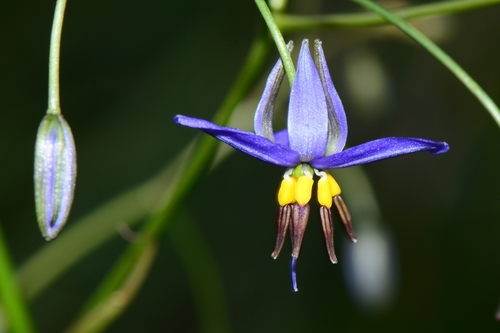
Bright purple berries appear on slender stems above strappy blue-green leaves. The berries were eaten and the tough leaves used for weaving baskets and bags. Common along creek banks and in open woodland. The delicate blue flowers come earlier; the berries signal Poorneet's arrival.
Climate context
Berries develop through late spring at 15–25°C. Drought and frost tolerant—one of the hardiest native lilies.
Seasonal indicator
- Fruiting during Poorneet (Tadpole season).
When to look
Monthly fruiting observations in Victoria. Data from iNaturalist.
Where to look
Observations along the Merri Creek corridor (Fawkner to Dights Falls). Data from iNaturalist.
Historical record
Earliest Victorian specimen: 1852, collected by Mueller, F..
Gold rush
The Victorian gold rush brought massive population growth and environmental destruction. Traditional lands were overrun. Many Wurundjeri people were confined to Coranderrk reserve from 1863.
Learn more: First Peoples and the gold rush, Coranderrk
Specimen data from the Atlas of Living Australia. The collection of botanical specimens occurred alongside — and sometimes in service of — the colonisation of Wurundjeri Country.