Kangaroo Grass
Themeda triandra
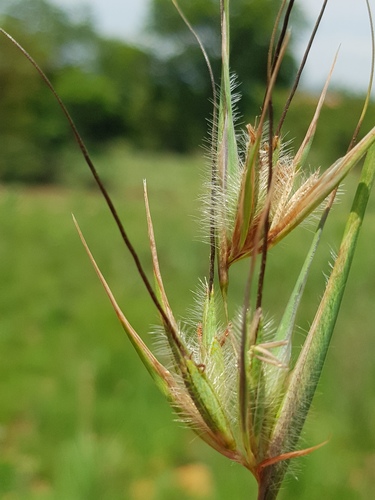
The grass that gives Buath Gurru its name. In late spring, the tufted grass sends up red-brown seed heads on long stems. Once dominant across the grassy woodlands, it's now mostly found in remnant patches. The seeds were traditionally ground for flour.
Climate context
A warm-season grass that flowers when temperatures exceed 26°C. Highly responsive to warming—flowers about 11 days earlier for each 1°C increase.
Seasonal indicator
- Flowering during Buath Gurru (Grass flowering season).
When to look
Monthly flowering observations in Victoria. Data from iNaturalist.
Has the timing shifted?
Peak flowering has shifted approximately 3.8 weeks earlier since 2015 — from Late October to Early October.
Based on citizen science observations. Many factors affect timing — sample sizes are small and patterns may not reflect true phenological change.
Where to look
Observations along the Merri Creek corridor (Fawkner to Dights Falls). Data from iNaturalist.
Historical record
Earliest Victorian specimen: 1840, collected by Robinson, G.A..
Frontier violence
A period of frontier conflict, forced removals, and the destruction of traditional food sources. George Augustus Robinson served as 'Chief Protector of Aborigines' while overseeing policies that confined people to reserves.
Learn more: Chief Protector records
Specimen data from the Atlas of Living Australia. The collection of botanical specimens occurred alongside — and sometimes in service of — the colonisation of Wurundjeri Country.